
How to Choose the Right Non-Alcoholic Beverage Distributor for Your Business
Choosing a beverage distributor used to be relatively straightforward. Restaurants and hospitality businesses focused on availability, pricing, and delivery timelines. If the supply chain worked, the partnership worked.
That approach no longer holds up—especially in the non-alcoholic category.
Today, non-alcoholic beverages are not just an add-on. They are becoming a core part of beverage programs, guest experience, and revenue strategy. As demand grows, the role of the distributor becomes significantly more important.
This is not simply about sourcing products. It is about selecting a partner that can help you build, position, and scale a modern beverage program.
I. Executive Summary
The non-alcoholic beverage category is expanding rapidly, driven by changing consumer behavior and growing demand for premium alternatives. Restaurants, hotels, and event venues are no longer asking whether they should offer alcohol-free options—they are asking how to do it effectively.
- Demand for zero-proof beverages is increasing across all hospitality segments
- Premium brands are replacing basic alternatives
- Distributor selection directly impacts product quality and revenue potential
Choosing the right distributor is now a strategic decision—not just an operational one.
II. Understanding the Shift in Buyer Behavior
Hospitality buyers today are operating in a different environment than even a few years ago.
Guests are more informed, more selective, and more open to non-alcoholic options. But they also expect those options to feel intentional.
This has created a new type of demand:
- Products that match the quality of traditional wine and spirits
- Brands with strong positioning and storytelling
- Beverages that integrate seamlessly into menus and pairings
Distributors who understand this shift are no longer just suppliers—they are category partners.
III. Product Portfolio: Depth Matters More Than Volume
One of the first things to evaluate in a distributor is their product portfolio.
But this is where many businesses make a mistake.
It is not about having the largest selection. It is about having the right selection.
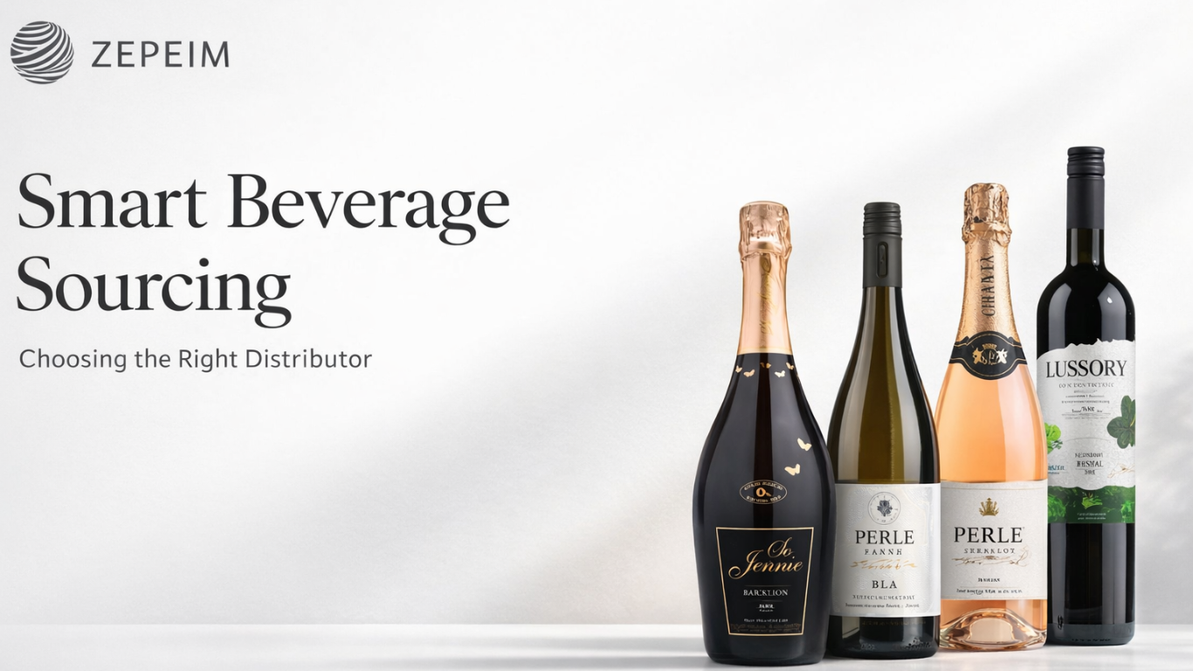
A strong distributor should offer a curated portfolio that includes premium, category-leading brands such as So Jennie Paris and Copenhagen Sparkling Tea.
Globally recognized brands like So Jennie Paris and Copenhagen Sparkling Tea are setting new standards for quality, presentation, and positioning in hospitality.
A well-structured portfolio should also include:
- Premium sparkling alternatives
- Wine-style non-alcoholic beverages
- Spirits alternatives for cocktail programs
IV. Brand Quality and Positioning
Not all non-alcoholic products are equal—and your distributor plays a major role in determining the quality of what you offer.
Brands like Lyre’s and Pierre Chavin represent a shift toward premium, experience-driven beverages.
Internationally, companies such as Lyre’s and Pierre Chavin have established themselves as leaders in the category, offering products designed specifically for hospitality environments.
The right distributor should prioritize brands that:
- Align with your restaurant’s positioning
- Support premium pricing
- Enhance guest perception
V. Supply Chain Reliability and Scalability
Even the best product portfolio is ineffective without reliable supply.
Consistency matters.
Restaurants need distributors who can:
- Maintain steady inventory levels
- Handle seasonal demand fluctuations
- Scale with business growth
This is especially important in hospitality, where menu consistency directly impacts guest experience.
VI. Financial Impact: Beyond Cost Per Unit
Price is always a consideration—but focusing only on cost per unit can be misleading.
A better approach is to evaluate the overall financial impact.
Premium non-alcoholic beverages often allow restaurants to:
- Increase average check size
- Improve margins
- Convert non-drinking guests into revenue contributors
A distributor that provides higher-quality products may deliver better long-term profitability—even at a higher upfront cost.
VII. Category Expertise and Support
The best distributors do more than deliver products. They provide guidance.
This includes:
- Menu integration advice
- Staff training insights
- Product recommendations based on venue type
As the category evolves, this expertise becomes increasingly valuable.
VIII. Building a Long-Term Partnership
Choosing a distributor is not a one-time decision. It is the beginning of a long-term relationship.
The right partner should:
- Understand your business model
- Adapt to changing trends
- Support your growth over time
This is particularly important in a category that is still evolving.
IX. Conclusion
The non-alcoholic beverage category is no longer emerging—it is establishing itself as a core part of modern hospitality.
Choosing the right distributor is one of the most important decisions a restaurant can make in this space.
It is not just about supply. It is about building a beverage program that reflects where the industry is heading—and where your business wants to be.
Further Reading & Data Sources
Apply for a Wholesale Account with Zepeim
Access premium non-alcoholic beverages and expert support designed for restaurants, hotels, and hospitality leaders.
Apply NowFrequently Asked Questions
What should I look for in a beverage distributor?
Focus on product quality, brand portfolio, reliability, and category expertise.
Are non-alcoholic beverages profitable?
Yes, they often increase margins and overall revenue.
Do I need many brands?
No, a curated selection of premium brands is more effective.
How important is brand positioning?
Very important—it directly affects pricing and guest perception.
Can distributors help with menu strategy?
Yes, strong distributors provide guidance and support.
Recent Posts
-
How to Choose the Right Non-Alcoholic Beverage Distributor for Your Business
Choosing a beverage distributor used to be relatively straightforward. Restaurants and hospitality …Apr 6th 2026 -

Why Zero-Proof Beverage Programs Are Becoming Essential for Modern Restaurants
The definition of a modern restaurant is evolving—and not in obvious ways. It’s easy to assume inno …Mar 24th 2026 -

The 2026 Luxury Non-Alcoholic Beverage Report: How Premium Zero-Proof Sparkling Is Transforming Fine Dining, Guest Experience & Hospitality Revenue
The luxury beverage world is undergoing its most significant shift in decades. Guests at three-Mich …Nov 12th 2025