
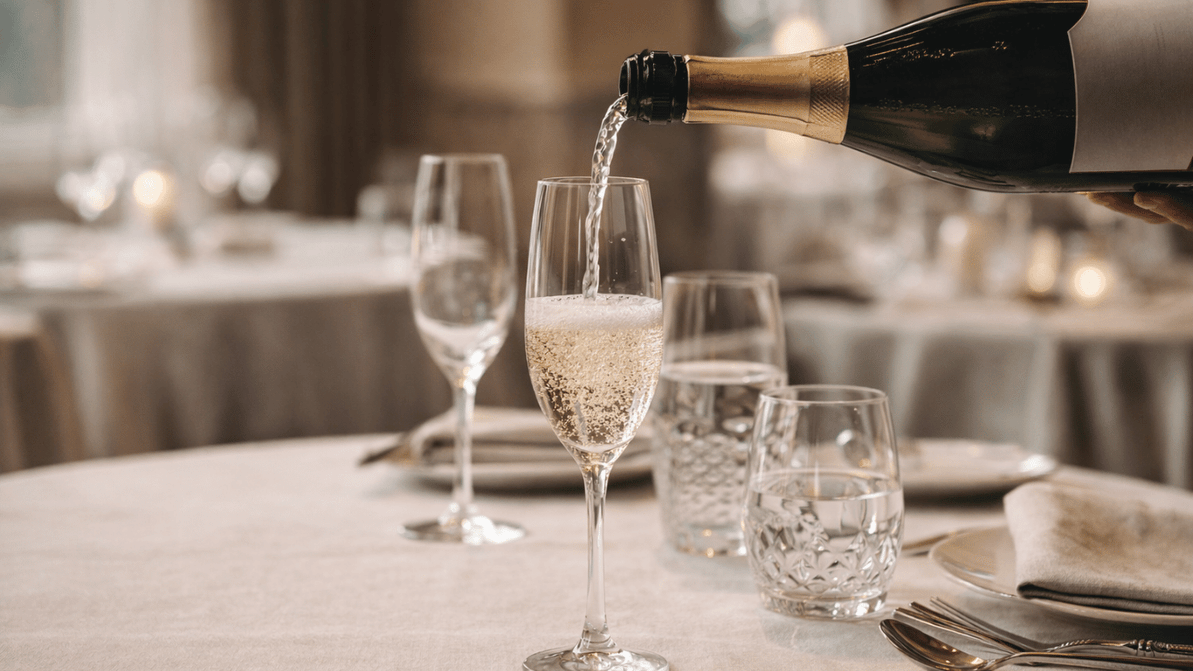
Why Zero-Proof Beverage Programs Are Becoming Essential for Modern Restaurants
The definition of a modern restaurant is evolving — and not in obvious ways. One of the most meaningful changes is happening quietly, across beverage programs. Guests are drinking more selectively and intentionally, and that's reshaping expectations at the table. For a growing segment, that means choosing not to drink alcohol, or alternating within the same meal. This is where zero-proof beverage programs stop being optional and start being a defining part of hospitality strategy.
From accommodation to relevance, revenue, and positioning
The non-alcoholic category has entered a new phase — one defined not just by growth, but by premiumization. The no- and low-alcohol segment continues to expand steadily across major markets, and expectations have shifted with it:
- Guests want premium, experience-driven non-alcoholic options
- Restaurants are moving beyond mocktails toward structured programs
- Zero-proof offerings now contribute meaningfully to revenue
The takeaway is clear: zero-proof beverage programs are no longer about accommodation — they're about relevance, revenue, and competitive positioning.
A shift in consumption behavior
For decades, beverage consumption followed a predictable binary: guests either drank alcohol or they didn't. That binary no longer exists. Today many consumers operate in the middle — wine with dinner, then non-alcoholic afterward, or skipping alcohol entirely on certain occasions while still wanting a sophisticated drink.
This flexible-consumption model is especially prominent among younger generations, but it extends well beyond them — corporate professionals, athletes, wellness-focused individuals, and international travelers all contribute. What matters is the implication: these guests aren't opting out of the experience. They're redefining it.
The hospitality industry is adapting unevenly
Some restaurants have moved quickly, developing sophisticated non-alcoholic programs that sit alongside their wine lists. Others still rely on soda or overly sweet mocktails — and the difference is increasingly visible to guests.
Venues that invest in zero-proof aren't just meeting expectations; they're exceeding them, creating an environment where every guest feels equally considered. It's most evident in fine dining, where non-alcoholic pairings now mirror traditional wine pairings in structure, complexity, and presentation — often becoming a central part of the experience.
Why it matters strategically
Zero-proof programs solve a long-standing problem. Historically, non-drinking guests contributed very little to beverage revenue — water, soda, or basic juice offered limited margins and no real upsell. That dynamic has changed. By introducing premium non-alcoholic options, restaurants can:
- Increase average spend per guest
- Enhance the perceived value of the experience
- Expand their customer base
This isn't about replacing alcohol — it's about expanding the beverage ecosystem to include more guests, more occasions, and more revenue.
From substitute to premium experience
The category has matured into three tiers:
- Basic: soda, juice, simple alternatives
- Intermediate: mocktails, dealcoholized wines
- Premium: crafted, complex, experience-driven beverages
It's the premium tier driving growth in hospitality. Products like So Jennie Paris and Copenhagen Sparkling Tea aren't positioned as substitutes — they're standalone experiences built around craftsmanship, presentation, and storytelling, reinforcing that non-alcoholic doesn't mean lower quality.
Revenue and margin opportunity
Consider a mid-sized restaurant introducing a premium non-alcoholic sparkling option priced around $15–$18 per glass. If just 12–15 guests a night choose it instead of water or soda, the incremental revenue adds up — even conservative estimates point to tens of thousands of dollars in additional annual revenue, without increasing capacity, staffing, or operational complexity.
Margins are equally attractive. Premium non-alcoholic beverages often have lower acquisition costs than high-end wines or spirits while maintaining comparable pricing — a category that's not only additive, but highly efficient from a profitability standpoint.
The role of spirits alternatives
While sparkling products often lead the category, spirits alternatives play a growing role — letting restaurants build complex, alcohol-free cocktails that match traditional offerings in depth and presentation. Brands such as Lyre's and Kolonne Null help expand the category beyond wine-style beverages, replicating the structure and complexity of traditional spirits and wines without alcohol — so restaurants can build complete programs rather than isolated offerings.
Who's driving demand
The demand for zero-proof beverages is broad and diverse:
- Wellness-focused professionals
- Pregnant or health-conscious guests
- Corporate diners
- Younger consumers embracing moderation
What connects these groups isn't restriction — it's expectation. They want the same quality, presentation, and experience as any other guest.
How to start a zero-proof program
|
Step 1 · Start with core premium options Focus on a small number of high-quality products that represent the category well. Our Foundational tier is built exactly for this starting point. |
|
Step 2 · Integrate into menu structure Position zero-proof options alongside traditional beverages, not in a separate afterthought section. |
|
Step 3 · Train staff for confidence Language matters — these should be presented as premium choices, not consolation prizes. |
|
Step 4 · Track performance Monitor sales and guest feedback to refine the program over time. |
Build a zero-proof program that performs
Zepeim helps restaurants, hotels, and retailers build structured non-alcoholic programs — a curated premium portfolio across sparkling, wine, and spirits, organized by program level so you can start focused and scale. Explore our beverage programs by venue type, or apply for a wholesale account to access the full catalog.
Explore Beverage Programs → Apply for a Wholesale Account →Zero-proof programs: frequently asked questions
Recent Posts
-
Hidden Gems: Zero-Proof Champagne Alternatives
A senior wedding planner at a Manhattan events firm spent a January morning reviewing the previous …Aug 1st 2026 -
Exploring the World of Non-Alcoholic Aperitifs
The beverage manager of a boutique hotel in Boston's Back Bay walked her weekend team through the …Jul 29th 2026 -
Non-Alcoholic Cocktail Programs for Bars
The head bartender of a 40-seat cocktail bar in downtown Portland kept a paper notebook behind the …Jul 26th 2026