

Italian Non-Alcoholic Wine: A Growing Opportunity for Hospitality Businesses
A beverage director at a midtown Manhattan hotel sat across from her general manager last quarter with a single sheet of paper. Down the left column: the hotel's twenty most-requested cocktails, by volume. Down the right: the corresponding non-alcoholic alternative, by guest satisfaction score. The pattern was hard to miss. Wherever the menu offered an Italian aperitivo, a Tuscan red pairing, or a Prosecco service moment, the non-alcoholic version had been quietly losing the comparison — until she rebuilt the program around Italian non-alcoholic wines from a curated importer. Two quarters later, the spread had closed. For hospitality businesses serving any cuisine touched by Italian influence — and in the United States, that is most of them — the opportunity in Italian non-alcoholic wine is no longer theoretical. It is operational, measurable, and increasingly competitive.
Executive Summary
Italian non-alcoholic wine has moved from category curiosity to operational priority. The reason is structural: Italy produces more wine by volume than any country on earth, and the same viticultural depth that built Italian wine's global reputation is now being directed toward the alcohol-free segment. The result is a category that hospitality businesses can build around — not just supplement with.
For restaurants, hotels, retailers, and event venues, the Italian non-alcoholic wine category offers what no single producer or region alone can deliver: full varietal coverage (sparkling, white, rosé, red), cultural pairing authenticity, distinct regional voices from North to South, and pricing tiers that work for both core wine programs and Reserve-level luxury menus. Through Zepeim's curated Italian portfolio, U.S. operators can now access this depth from a single distributor — with the consultation, training, and fulfillment infrastructure that turn a category opportunity into a working revenue line.
Why Italian Non-Alcoholic Wine Is Different
Most national wine traditions arrived at the non-alcoholic category from one direction — typically a single style or production philosophy. Italy arrived from many. The country's regional fragmentation, which historically made Italian wine harder to summarize than French or German wine, is precisely what makes Italian non-alcoholic wine such a rich opportunity in 2026. Veneto contributes sparkling expertise built on Prosecco's heritage. Tuscany and Piedmont bring structured reds. Puglia and Southern Italy bring native varietals like Susumaniello that exist almost nowhere else. Sicily contributes Mediterranean whites. Each region's expertise has now been translated, with varying degrees of success, into 0.0% and low-alcohol formats.
For hospitality buyers, this regional depth matters in a way it does not for other origin countries. An Italian restaurant cannot credibly pour a German Riesling alternative alongside an osso buco. A high-end hotel cannot serve a flute of South African sparkling at a guest's request for "a glass of Italian bubbles, no alcohol please." The cultural pairing logic of Italian cuisine demands Italian non-alcoholic wine — and that demand is now meetable.
|
#1
World Wine Producer by Volume
|
20
Italian Wine Regions
|
4 Styles
Now Available 0.0% / NA
|
The second differentiator is technical. Italian non-alcoholic wine producers have invested heavily in modern dealcoholization — vacuum distillation, low-temperature spinning cone, gentle reverse osmosis — that preserves aromatic compounds and structural acidity rather than stripping them. The technical floor has risen sharply in the last three years, and the gap between traditional Italian wine and its 0.0% counterpart is narrower than at any point in the category's history.
The Hospitality Channels Where the Opportunity Is Largest
Italian non-alcoholic wine is not a one-channel opportunity. The same category serves five distinct hospitality segments, each with its own pricing logic, guest profile, and inventory model. Operators who understand this fragmentation are the ones building winning programs.
Italian and Italian-influenced restaurants — from neighborhood trattorias to fine-dining destinations — are the largest channel. These operators have a built-in cultural argument for Italian non-alcoholic wine that no marketing can fabricate. A pour of Italian 0.0% with a Tuscan steak reads as authentic; an Italian 0.0% as the toasting wine at an anniversary dinner reads as thoughtful. The same SKUs serve aperitivo programs, by-the-glass service, and bottle-list expansion.
Luxury and boutique hotels represent the second-largest channel. International guests — particularly those arriving from European, Middle Eastern, and Asian markets — increasingly expect a credible non-alcoholic wine program in any property positioning itself as premium. Italian non-alcoholic wine performs especially well in minibar programs, room service offerings, and ballroom event service, where the bottle's recognizable identity matters as much as the liquid.
Wedding and event venues are a fast-growing segment. The non-alcoholic toasting moment is becoming a meaningful part of modern celebrations — for designated drivers, pregnant guests, sober celebrants, and increasingly multi-faith guest lists. Italian sparkling 0.0% has become the default solution because it preserves the ceremonial weight of a Champagne or Prosecco toast without the alcohol question.
Specialty retail and concept stores round out the picture. Italian non-alcoholic wine sells well at retail not only because of the broader category lift, but because Italian origin still carries unusual brand equity at the shelf. A bottle marked "Made in Italy" with a recognizable regional style cue moves faster than a generic premium NA SKU of comparable quality.
What Strategic Buyers Look for in an Italian NA Wine Program
Building a working Italian non-alcoholic wine program is not about chasing a single hero SKU. It is about portfolio logic — coverage across the four wine styles (sparkling, white, rosé, red), authenticity of regional sourcing, and a pricing architecture that maps to a venue's existing beverage tiers.
Three criteria separate a serious Italian NA wine program from a token gesture:
1. Real wine origin. Look for products produced from actual fermented wine that has been dealcoholized — not flavored beverages, juice-based reconstructions, or artificially carbonated substitutes. Real Italian wine origin shows up in acidity balance, varietal expression, and food-pairing behavior.
2. Regional and varietal range. A program built only on Veneto sparklings, or only on Tuscan reds, leaves obvious holes. A working program covers at least one Northern Italian sparkling, one structured white, one Southern Italian red, and ideally a rosé — so the wine list reads as complete rather than experimental.
3. Pricing tier flexibility. A complete program needs both a mid-tier workhorse (for by-the-glass and core menu service) and a Reserve-tier expression (for tasting menus, special occasions, and bottle service). Italian non-alcoholic wine now offers both ends of the spectrum, with brands like Prima Pavé occupying the premium fine-dining position and brands like Princess Alternativa serving the broader core program tier.
The Zepeim curation advantage: Rather than asking buyers to evaluate dozens of Italian non-alcoholic wine producers themselves — many of which have inconsistent quality and unreliable U.S. distribution — Zepeim's Italian portfolio applies a quality filter upstream. The brands that make it into the catalog have already been vetted for production method, varietal credibility, fine-dining readiness, and supply reliability.
Anchor Selections from Zepeim's Italian NA Portfolio
The three selections below represent the core architecture of a working Italian non-alcoholic wine program — covering Northern Italian sparkling, Southern Italian red, and Halal-certified core-tier white. Each is available for wholesale through Zepeim, with the full Italian portfolio offering further depth in rosé, additional sparklings, and varietal whites.
 |
0.0% ABV · Vegan · Northern Italy
Prima Pavé Blanc de Blancs SparklingAward-winning 0.0% Italian sparkling produced in Northern Italy from sustainably farmed grapes, made without added sugar. White peach, green apple, and floral aromatics lead to a bright, mineral-driven palate with fine bubbles and a clean dry finish — the Reserve-tier anchor for any serious Italian NA wine program. Ideal for: Fine-dining tasting menus, hotel ballroom service, premium aperitivo programs, wedding and event venues, by-the-glass sparkling lists. View Product → |
 |
0.0% ABV · Susumaniello · Southern Italy
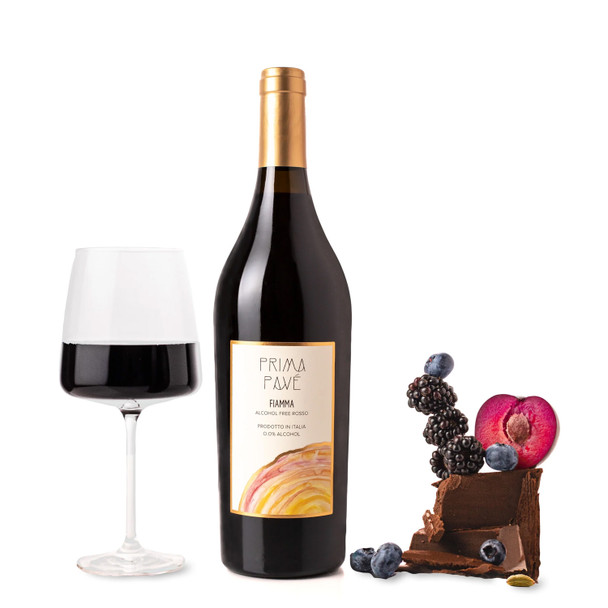
Prima Pavé Fiamma RedA structured, food-driven still red crafted in Puglia (Southern Italy) from the rare Susumaniello varietal — one of the few non-alcoholic reds anywhere built on a native Italian grape rather than a generic international cultivar. Dealcoholized to 0.0% while preserving real tannin presence, dark berry depth, and a dry finish. Made without added sugar. Ideal for: Trattorias and Italian fine dining, steakhouses with Italian crossover menus, hotel restaurants, premium retail looking for a distinctive red NA SKU. View Product → |
 |
0.0% ABV · Halal · Verona, Italy
Princess Alternativa Bianco Dry WhiteA dry Italian non-alcoholic white from Verona's pioneering Princess Alternativa house, produced from fermented and dealcoholized white table grapes and Halal certified. Clean acidity and a versatile food-pairing profile — built to anchor the core tier of an Italian NA program at attractive case economics. Ideal for: Core by-the-glass programs, hotel banquet service, Halal-observant hospitality, breakfast and brunch menus, multi-faith event venues. View Product → |
The full Zepeim Italian portfolio additionally includes Prima Pavé Grand Cuvée, Rosé Brut, Rosé Dolce Demi-Sec, Bianca D'Or, and the Princess Alternativa Rosso and Bollicine Bianco Extra Dry sparkling. Explore the complete non-alcoholic wine category.
The Financial Logic of an Italian NA Wine Category
A full Italian non-alcoholic wine category — three to six SKUs spanning sparkling, white, red, and rosé — typically generates two distinct margin advantages that a single-SKU approach cannot match.
The first advantage is price-point laddering. A category with both core-tier ($20–$25 retail) and Reserve-tier ($30–$35+ retail) bottles allows venues to serve both casual and premium guest occasions without losing the higher-margin transaction. By-the-glass pricing follows: a $9 core pour for happy hour and a $18–$22 Reserve pour for tasting menus, both from the same category, with no inventory cannibalization.
The second advantage is suggest-sell velocity. Servers who can offer "the Italian sparkling" or "the structured Italian red" as a confident upsell convert at higher rates than servers offering a generic "non-alcoholic option." Italian provenance gives the upsell a story. A story sells a glass. A glass moves the check average.
Zepeim Wholesale Discount Structure
5% off — orders of 12+ cases (mix and match across the full Italian portfolio and other Zepeim brands)
7.5% off — orders of 36+ cases
Free shipping — orders over $350 anywhere in the continental U.S.
Fast fulfillment — ships within 1 business day from Zepeim's Los Angeles warehouse, nationwide including Hawaii
Because Zepeim's volume discounts mix-and-match across the catalog, a venue building a complete Italian non-alcoholic wine program can hit the 12-case or 36-case discount tiers with sensible inventory depth on each SKU — no need to overstock any single product to chase a tier threshold.
Who Actually Orders Italian Non-Alcoholic Wine
The demand profile for Italian non-alcoholic wine spans an unusually broad guest base — broader than for most non-alcoholic categories — which is part of why the operational opportunity is so durable.
The wellness-conscious diner orders Italian 0.0% because it carries the ritual and pairing logic of wine without the alcohol calories. The designated driver orders it because it preserves the dining experience instead of demoting them to soda. The pregnant guest orders it for the same reason a regular wine drinker orders Sancerre — it is the appropriate pour with the dish in front of her. The Halal-observant guest orders Italian 0.0% — particularly Halal-certified options — because it is often the only authentic pairing option available with Italian cuisine. The sober-curious millennial orders it because it photographs well and reads as intentional. The international traveler — especially from Middle Eastern, Asian, and increasingly European markets — orders it because it is now the global default for premium non-alcoholic dining.
No single one of these guest profiles is large. Combined, they typically represent 10% to 18% of covers in a premium urban restaurant or hotel restaurant — and that percentage is rising in nearly every market Zepeim partners report from.
Building the Program in Four Phases
An Italian non-alcoholic wine category does not need to launch all at once. Most successful programs are built in four sequential phases over six to eight weeks, allowing buyers to validate guest demand before scaling depth.
| Phase | Timeline | Focus |
|---|---|---|
| 1. Sparkling First | Week 1–2 | Launch with one Italian sparkling SKU — Prima Pavé Blanc de Blancs or Princess Alternativa Bollicine — and place it on the by-the-glass list. Sparkling outsells still at category launch by roughly 3:1 and proves demand quickly. |
| 2. Add the Still White | Week 3–4 | Bring in a still Italian white once sparkling velocity is established. This SKU drives pairing depth across seafood, pasta, and antipasto courses, and unlocks tasting-menu inclusion. |
| 3. Add the Red | Week 5–6 | Layer in a structured Italian red — Prima Pavé Fiamma or Princess Alternativa Rosso — to complete the four-style framework. The red is the slowest-moving SKU but the one that signals program seriousness to guests and sommeliers. |
| 4. Expand and Optimize | Week 7–8+ | Based on actual velocity, add rosé, a second sparkling tier (Reserve), or single-serve formats for events. Refine by-the-glass pricing. Revisit case-tier mix to maximize Zepeim volume discount eligibility. |
An Opportunity That Compounds
The Italian non-alcoholic wine opportunity is the kind that rewards operators who move on it early. The category is deep enough to build a full program around. The supply chain is mature enough to deliver on volume commitments. The guest base is broad enough to absorb the inventory across multiple SKUs. And the cultural authority of Italian wine — the single most globally recognized national wine identity — continues to give Italian 0.0% bottles a credibility advantage that other origin countries are still working to earn.
For restaurants, hotels, retailers, and event venues thinking about where to focus the next year of their non-alcoholic beverage investment, the Italian category sits at the intersection of demand, supply, margin, and brand authority. Through Zepeim — the U.S.'s most established non-alcoholic beverage importer since 2016 — the full Italian portfolio is available nationwide, with the curatorial support and operator training that have defined the Zepeim approach from the start.
Build Your Italian Non-Alcoholic Wine Program with Zepeim
Apply for a Zepeim wholesale account to access the full curated Italian non-alcoholic wine portfolio — Prima Pavé, Princess Alternativa, and the broader European catalog. Ships within one business day from Los Angeles. Nationwide delivery including Hawaii. Volume discounts available across the entire portfolio.
Apply for a Wholesale Account →Frequently Asked Questions
Recent Posts
-
Hidden Gems: Zero-Proof Champagne Alternatives
A senior wedding planner at a Manhattan events firm spent a January morning reviewing the previous …Aug 1st 2026 -
Exploring the World of Non-Alcoholic Aperitifs
The beverage manager of a boutique hotel in Boston's Back Bay walked her weekend team through the …Jul 29th 2026 -
Non-Alcoholic Cocktail Programs for Bars
The head bartender of a 40-seat cocktail bar in downtown Portland kept a paper notebook behind the …Jul 26th 2026