
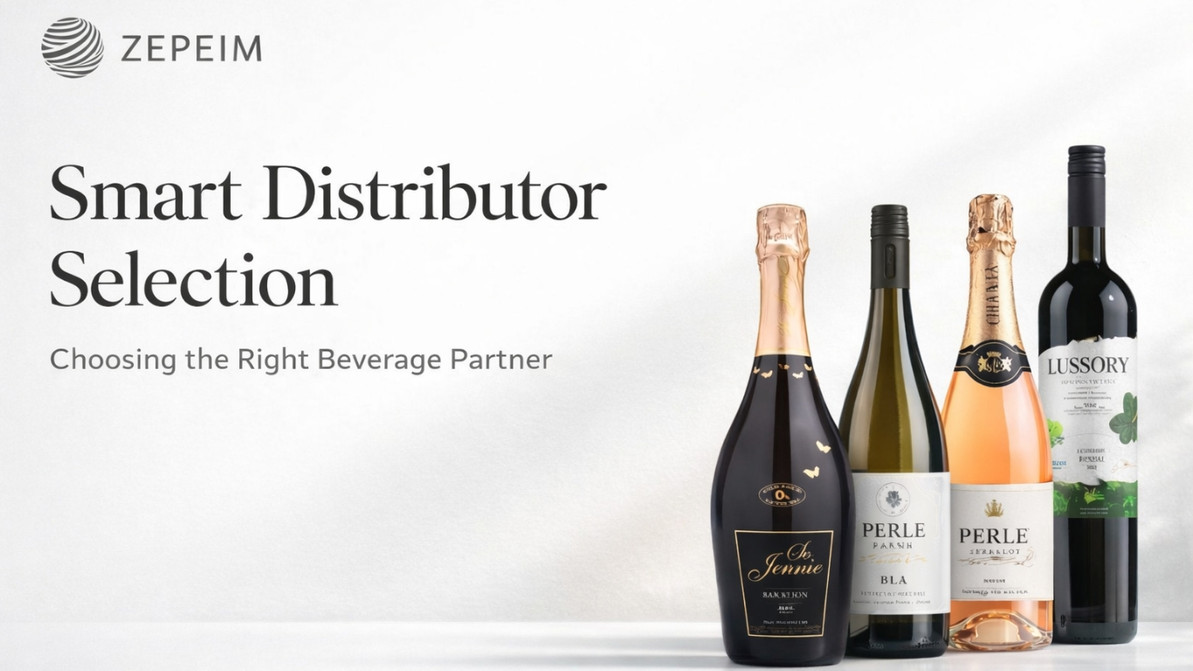
Why Restaurants Are Searching for Full-Range Non-Alcoholic Beverage Suppliers in 2026
Something subtle but important is happening across restaurants in 2026 — not in menus or interiors, but in how operators source their beverages. Restaurants are no longer looking for individual non-alcoholic products; they're searching for full-range suppliers. What used to be a side option has become a full category that needs structure, variety, and consistency, and that's forcing restaurants to rethink how they source, manage, and scale their programs.
Zero-proof is now a permanent part of hospitality
In 2026, demand for non-alcoholic beverages isn't just growing — it's becoming a fixed part of the industry. The no- and low-alcohol market is on a path of steady long-term expansion, zero-proof has moved to the core of restaurant menus rather than an afterthought, and consumers expect variety, quality, and premium experiences, not just alcohol-free alternatives.
As a result, restaurants are shifting from sourcing individual products to partnering with distributors that offer a complete, curated portfolio — one relationship that covers the whole program.
The rise of zero-proof demand
The biggest driver behind this shift is simple: demand has changed. Consumers are drinking differently — younger generations especially are moving toward moderation and wellness-focused lifestyles. In many cases they aren't eliminating drinking entirely; they're becoming more selective.
That has created a new expectation inside restaurants. Guests still want the experience of drinking — presentation, complexity, pairing — but without alcohol. Zero-proof offerings are no longer about substitution; they're about experience.
Why "full-range" matters more than ever
So why are restaurants specifically searching for full-range suppliers? Because a single product is no longer enough. A modern beverage program needs:
- Sparkling alternatives for celebrations
- Wine-style options for pairing menus
- Spirits alternatives for cocktails
- Functional or wellness-based drinks
This is where distributors with a limited catalog fall short. Restaurants don't want to manage multiple vendors just to build a complete program — they want a single partner who can provide everything, from premium sparkling bottles to spirits alternatives.
Premium brands are driving the shift
Another major factor is the rise of premium non-alcoholic brands. Products like So Jennie Paris and Copenhagen Sparkling Tea are redefining how non-alcoholic beverages are positioned in hospitality — now featured in fine dining, luxury hotels, and high-end events.
These aren't "alternatives." They're premium products designed for:
- Wine pairings
- Celebratory occasions
- High-end guest experiences
And once restaurants start using these products, they quickly realize they need a broader range — not just one or two SKUs.
Operational simplicity at scale
There's also a practical reason behind this trend. Managing multiple suppliers creates complexity — different delivery schedules, inconsistent stock availability, and a heavier administrative workload.
By working with a full-range distributor, restaurants simplify operations significantly. Everything comes from one place, orders are streamlined, and inventory is easier to manage. It's not just convenience — it's efficiency at scale.
Revenue opportunities are expanding
From a financial perspective, the shift is even more interesting. Premium non-alcoholic beverages are no longer low-value items — in many cases they're priced similarly to alcoholic drinks. Zero-proof cocktails can reach premium price points in modern bars, and high-end sparkling alternatives are positioned like champagne.
This transforms non-drinking guests into revenue contributors. Instead of ordering water, they're ordering curated beverages — and that changes the economics of the entire table.
The role of spirits alternatives
Beyond wine and sparkling, spirits alternatives are becoming essential. Brands like Lyre's and Kolonne Null help restaurants build complete zero-proof cocktail programs that replicate the traditional drinking experience.
This means restaurants can offer:
- Alcohol-free cocktails
- Full tasting menus
- Inclusive beverage programs
And again, this requires a distributor with a broad portfolio rather than a handful of SKUs.
Consumer expectations are higher than ever
Perhaps the most important factor is expectation. Today's guests expect choice, quality, and presentation. Offering one or two non-alcoholic options is no longer enough — guests notice when a program feels incomplete, and in competitive markets that matters.
Restaurants that invest in full-range beverage programs stand out — not just because they offer more, but because they offer better experiences.
Build a complete program with one partner
Zepeim is a full-range non-alcoholic distributor — sparkling, wine-style, spirits alternatives, and RTDs from one curated catalog, with the logistics and category expertise to keep it all in stock. Explore our beverage programs by venue type, or apply for a wholesale account to access the full catalog.
Explore Beverage Programs → Apply for a Wholesale Account →Full-range suppliers: frequently asked questions
Recent Posts
-
Hidden Gems: Zero-Proof Champagne Alternatives
A senior wedding planner at a Manhattan events firm spent a January morning reviewing the previous …Aug 1st 2026 -
Exploring the World of Non-Alcoholic Aperitifs
The beverage manager of a boutique hotel in Boston's Back Bay walked her weekend team through the …Jul 29th 2026 -
Non-Alcoholic Cocktail Programs for Bars
The head bartender of a 40-seat cocktail bar in downtown Portland kept a paper notebook behind the …Jul 26th 2026