
How Non-Alcoholic Beverage Fulfillment Works: A Brand's Guide
Order fulfillment is one of the most time-consuming parts of running a beverage brand — and non-alcoholic wine, spirits, and ready-to-drink products carry expectations that catch a lot of brands (and a lot of 3PLs) off guard. This is a plain guide to how fulfillment actually works for the category, and what separates a partner that gets it from one that treats your bottles like any other box.
DTC and B2B are different jobs
Most beverage brands need both, and they behave nothing alike. Understanding the split is the first step to setting up fulfillment that doesn't break the moment you grow.
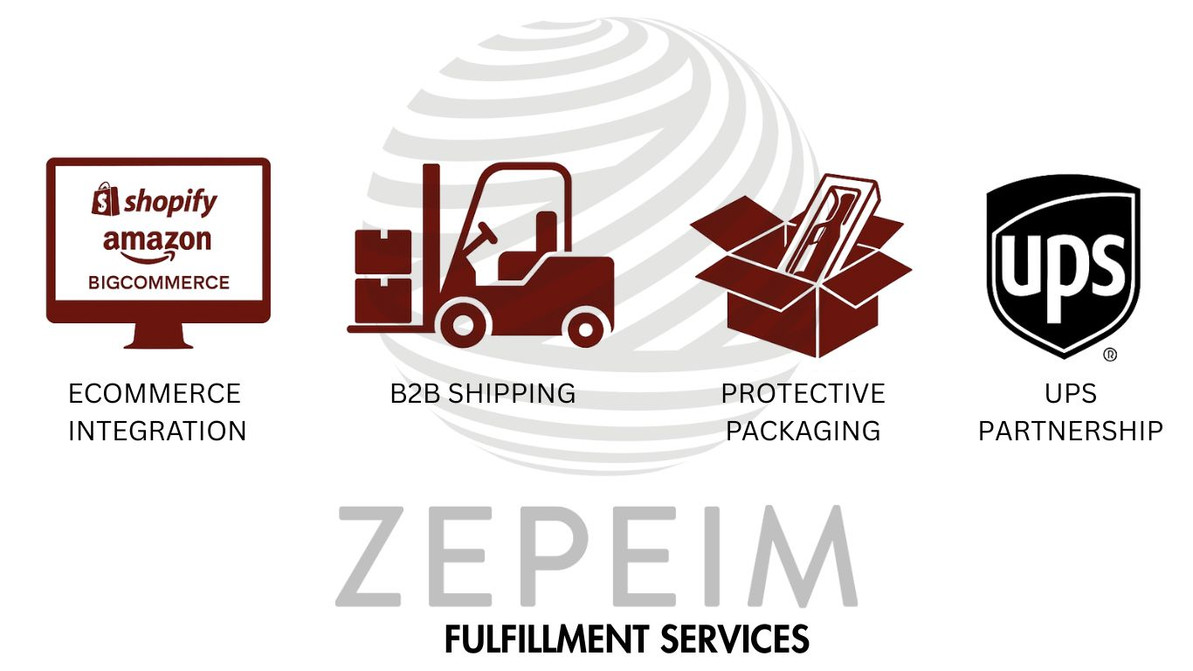
Direct-to-consumer (DTC) is the high-volume, one-at-a-time flow: an order lands from your Shopify or Amazon store, gets picked, packed into a breakage-safe shipper, and goes out to a single address. Success here is measured in turnaround speed, zero breakage, and an unboxing that reflects your brand.
Business-to-business (B2B) is the bulk flow: full-case or palletized shipments to distributors, retail chains, hotels, and event venues. Success here is about case prep, accurate labeling, pallet organization, and freight coordination — getting large orders there on time and intact.
Breakage is the line between a good and bad fulfillment partner
Shipping glass bottles takes more than a cardboard box and packing peanuts. The brands that ship well use dedicated molded bottle shippers — engineered for the weight and fragility of glass and the temperature shifts of transit — so wine and spirits arrive intact and presentation-ready, not rattling or cracked.
It's the single most common place generalist 3PLs fall short. A provider that ships electronics or apparel all day isn't set up for the failure modes of a wine bottle, and the broken-arrival rate shows it. Category-specific packaging is not a nice-to-have here; it's the whole game.
Platform integration and shipping rates
Good fulfillment is invisible because it's wired into your sales channels. Orders should flow automatically from your storefront — Shopify and Shopify Plus, Amazon (FBA and FBM), BigCommerce, WooCommerce, and custom storefronts — into the warehouse without you re-keying anything. The integration is what lets you focus on growth instead of order entry.
Shipping cost is the other lever. High-volume fulfillment partners hold carrier rates that small brands can't access on their own — a direct UPS relationship for parcels, LTL freight for pallets — which meaningfully changes your per-order economics from one-bottle dropships up to bulk distributor pallets.
Choosing a fulfillment partner for non-alcoholic beverages
If you're evaluating a 3PL for your non-alcoholic brand, a short checklist separates the specialists from the generalists:
Looking for a fulfillment partner, not just an explainer?
Zepeim runs warehousing and fulfillment built specifically for non-alcoholic beverages — DTC and B2B, breakage-safe bottle shipping, platform integration, and one-business-day turnaround from our Greater Los Angeles facility. See how the service works and get a quote tailored to your brand.
Explore Warehousing & Fulfillment → All Services →Recent Posts
-

Hidden Gems: Zero-Proof Champagne Alternatives
A senior wedding planner at a Manhattan events firm spent a January morning reviewing the previous …Aug 1st 2026 -

Exploring the World of Non-Alcoholic Aperitifs
The beverage manager of a boutique hotel in Boston's Back Bay walked her weekend team through the …Jul 29th 2026 -
Non-Alcoholic Cocktail Programs for Bars
The head bartender of a 40-seat cocktail bar in downtown Portland kept a paper notebook behind the …Jul 26th 2026