
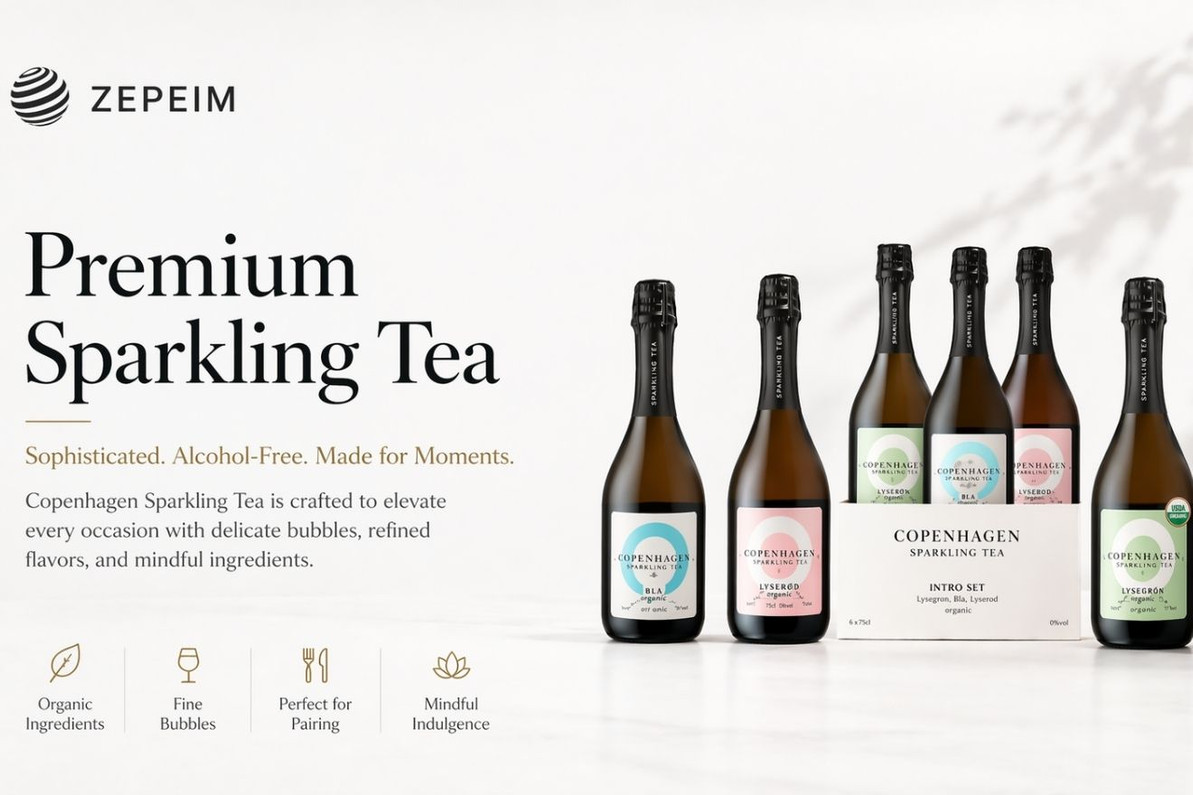
Why Copenhagen Sparkling Tea Is Leading the Premium Zero-Proof Category
If you look closely at what’s happening in high-end restaurants in 2026, there’s a clear pattern emerging.
It’s not just that non-alcoholic beverages are growing—it’s that certain products are leading the category. And one name keeps appearing in wine pairings, tasting menus, and luxury hospitality environments:
Copenhagen Sparkling Tea.
That’s not by accident. It’s the result of a product that doesn’t try to imitate alcohol—but instead builds something entirely new.
I. Executive Summary
The premium zero-proof category is evolving fast, driven by demand for high-quality, experience-led beverages.
- Sparkling tea is emerging as a serious alternative to wine and champagne
- The global sparkling tea segment is growing due to health-conscious consumers and demand for premium alternatives
- Copenhagen Sparkling Tea is now served in Michelin-level dining environments across multiple countries
Within this shift, Copenhagen Sparkling Tea has positioned itself as a Tier-1, gastronomy-grade beverage—not just another non-alcoholic option.
II. It Doesn’t Try to Replace Wine—It Redefines the Category
Most non-alcoholic beverages historically followed the same idea: replicate wine or spirits.
The problem? That approach rarely delivers the same complexity.
Sparkling tea takes a different path.
Instead of imitation, it builds on the natural strengths of tea—structure, tannins, aromatics—and enhances them with carbonation. The result is a drink that behaves like wine in pairing, but stands on its own identity.
This shift—from imitation to originality—is one of the main reasons it resonates with chefs and sommeliers.
III. Built for Gastronomy, Not Just Casual Drinking
There’s a reason Copenhagen Sparkling Tea appears in fine dining more than most zero-proof beverages.
It was created specifically for pairing.
Founded in 2017 by award-winning sommelier Jacob Kocemba, the product was designed to solve a real problem: finding a non-alcoholic drink that could match complex dishes.
Today, it is served in dozens of Michelin-starred restaurants globally.
That alone changes how it’s perceived:
- Not a substitute
- Not a soft drink
- But a serious dining companion
Even industry reports position it alongside luxury brands like So Jennie Paris as a top-tier offering in hospitality programs.
IV. Complexity That Matches Fine Dining Expectations
One of the biggest challenges in the zero-proof category is delivering complexity without alcohol.
Copenhagen Sparkling Tea solves this through blending.
Each bottle typically includes multiple tea varieties—green, white, oolong, and black—creating layered flavor profiles that evolve on the palate.
This creates something most alternatives lack:
- Depth
- Balance
- Structure
For chefs, this matters. Because pairing is not about sweetness—it’s about interaction with food.
V. Premium Positioning and Presentation
Let’s be honest—perception matters in hospitality.
Copenhagen Sparkling Tea is designed to look and feel like a luxury product:
- Champagne-style bottles
- Elegant labeling
- Fine bubbles and texture
This allows restaurants to:
- Serve it in wine glasses
- Include it in tasting menus
- Price it alongside premium beverages
It doesn’t feel like a compromise. It feels intentional.
VI. Alignment with Consumer Trends
The rise of Copenhagen Sparkling Tea is also perfectly timed with broader consumer shifts.
Today’s consumers are:
- Reducing alcohol consumption
- Prioritizing wellness
- Looking for premium experiences without compromise
The sparkling tea category directly aligns with this mindset, offering:
- Low or zero alcohol
- Natural ingredients
- Functional and health-oriented appeal
This alignment is a major driver of category growth.
VII. Versatility Across Occasions
Another reason for its leadership position is versatility.
Copenhagen Sparkling Tea works across multiple use cases:
- Aperitif
- Food pairing
- Celebration drink
- Alcohol-free tasting menus
It bridges the gap between casual and premium—something very few products manage to do effectively.
VIII. A New Category Leader, Not Just a Product
What’s interesting is that Copenhagen Sparkling Tea is not just competing within the zero-proof category—it’s helping define it.
In many ways, it represents a shift toward:
- Experience-driven beverages
- Ingredient-led innovation
- Premium non-alcoholic positioning
And that’s why restaurants are adopting it—not because they need alternatives, but because they want better options.
IX. Conclusion
The success of Copenhagen Sparkling Tea reflects a larger transformation in hospitality.
Non-alcoholic beverages are no longer about removing alcohol—they are about creating something equally compelling.
And right now, very few products achieve that at the same level.
Copenhagen Sparkling Tea is leading because it doesn’t try to follow wine.
It creates its own category—and that’s exactly what modern restaurants are looking for.
Further Reading & Data Sources
Apply for a Wholesale Account with Zepeim
Access premium non-alcoholic beverages including Copenhagen Sparkling Tea and other leading brands for your hospitality business.
Apply NowFrequently Asked Questions
What makes Copenhagen Sparkling Tea different?
It is built on tea complexity rather than trying to imitate wine, offering a unique experience.
Is it used in fine dining?
Yes, it is served in Michelin-level restaurants globally.
Is sparkling tea growing in popularity?
Yes, it is one of the fastest-growing premium non-alcoholic segments.
Can it replace wine in pairings?
It can complement dishes similarly, though it offers its own unique profile.
Why do restaurants choose it?
Because it delivers premium quality, versatility, and strong guest experience.
Recent Posts
-
Hidden Gems: Zero-Proof Champagne Alternatives
A senior wedding planner at a Manhattan events firm spent a January morning reviewing the previous …Aug 1st 2026 -
Exploring the World of Non-Alcoholic Aperitifs
The beverage manager of a boutique hotel in Boston's Back Bay walked her weekend team through the …Jul 29th 2026 -
Non-Alcoholic Cocktail Programs for Bars
The head bartender of a 40-seat cocktail bar in downtown Portland kept a paper notebook behind the …Jul 26th 2026